With modern automotive design and manufacturing by and large influenced by technology and all sorts of regulations, the appearance of most vehicles nowadays is arguably less expressive and distinctive across manufacturers compared to, say, two or three decades ago. It is therefore not hard to explain the emerging trend of enthusiasts or collectors gravitating towards not only cars of historical significance in the world of motorsports, but also cars with defining appearances, beautiful contours that are perhaps too costly now for mass-producing technologies to replicate, and probably to give in to a large degree of nostalgia for iconic cars from the modern era.
It is a niche that emerged in relatively recent times and certain manufacturers and independent coachbuilders are finding their success as of late, revamping their own icons, or, restoring and modernising many yesteryear classics for a much more capable, comfortable, or as some describe, a civilised driving experience.
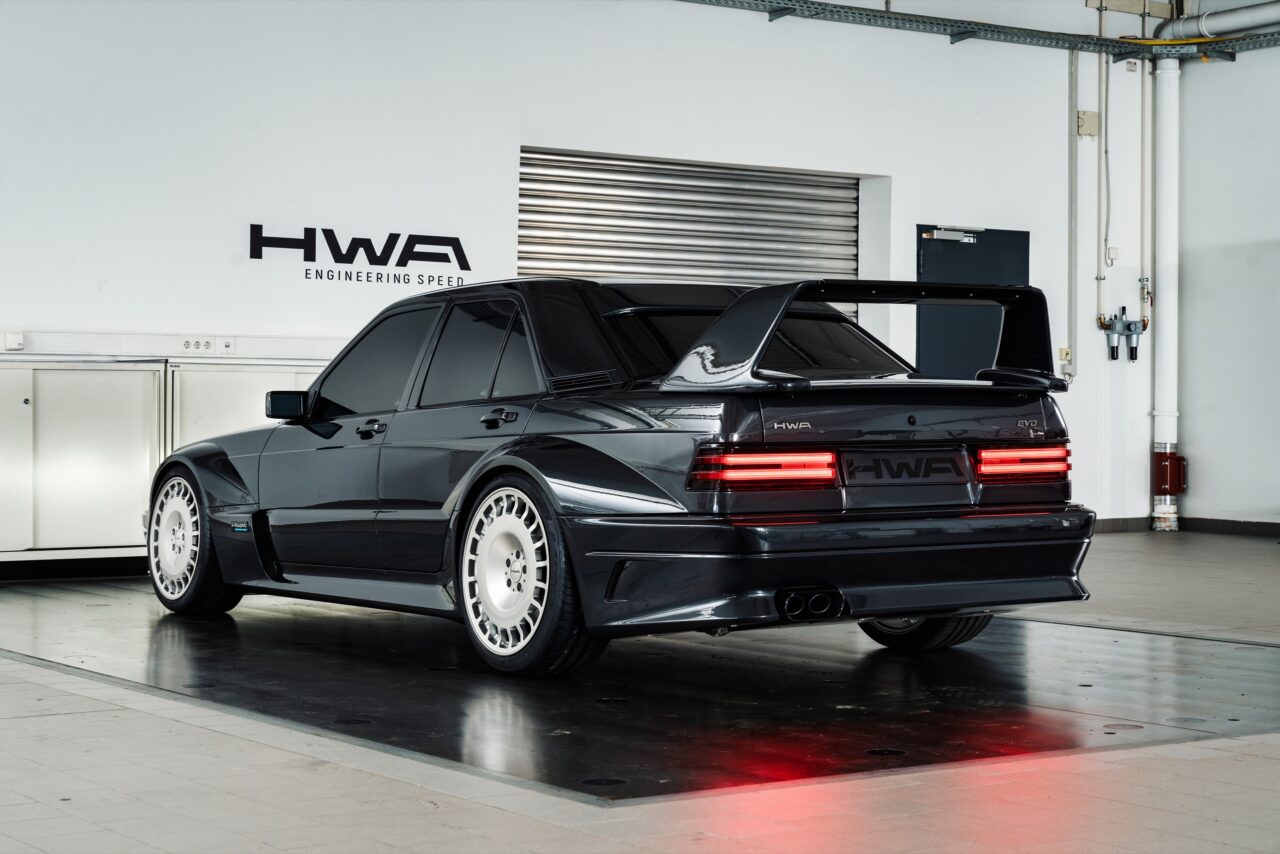
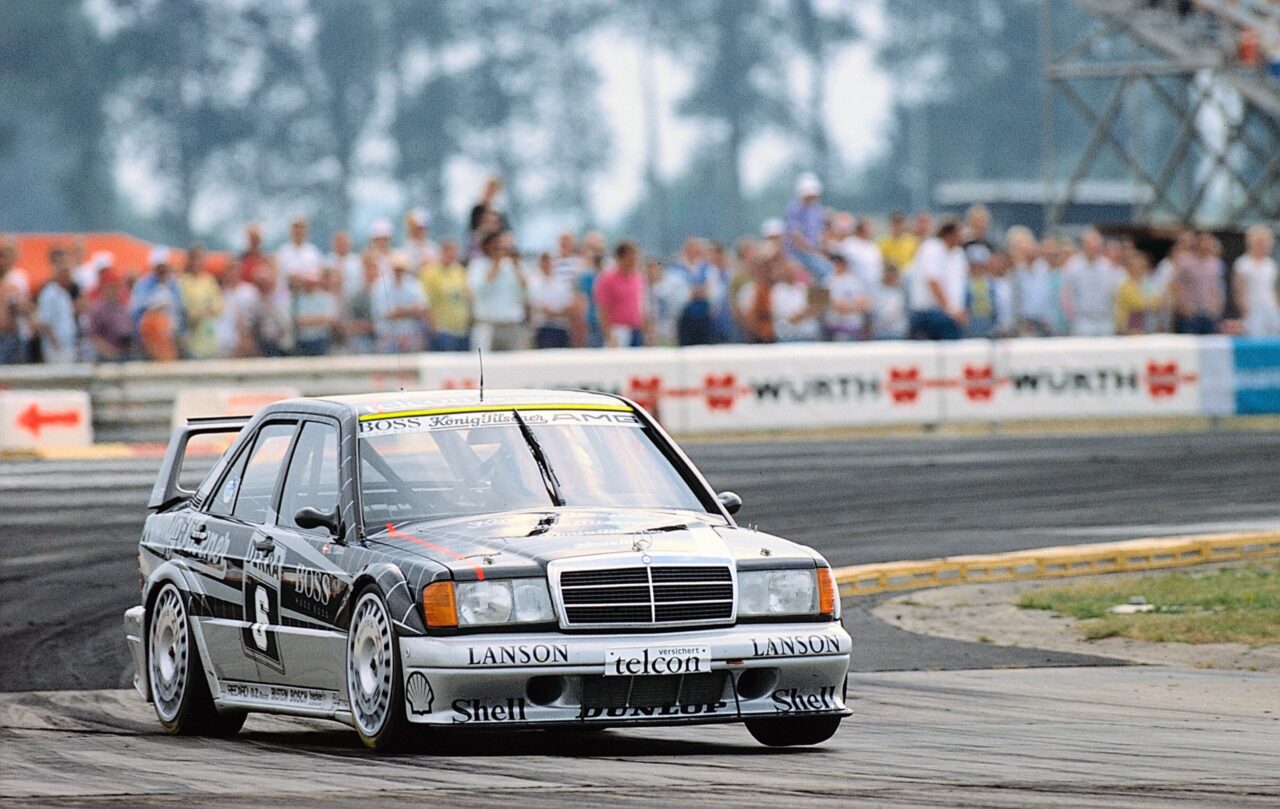
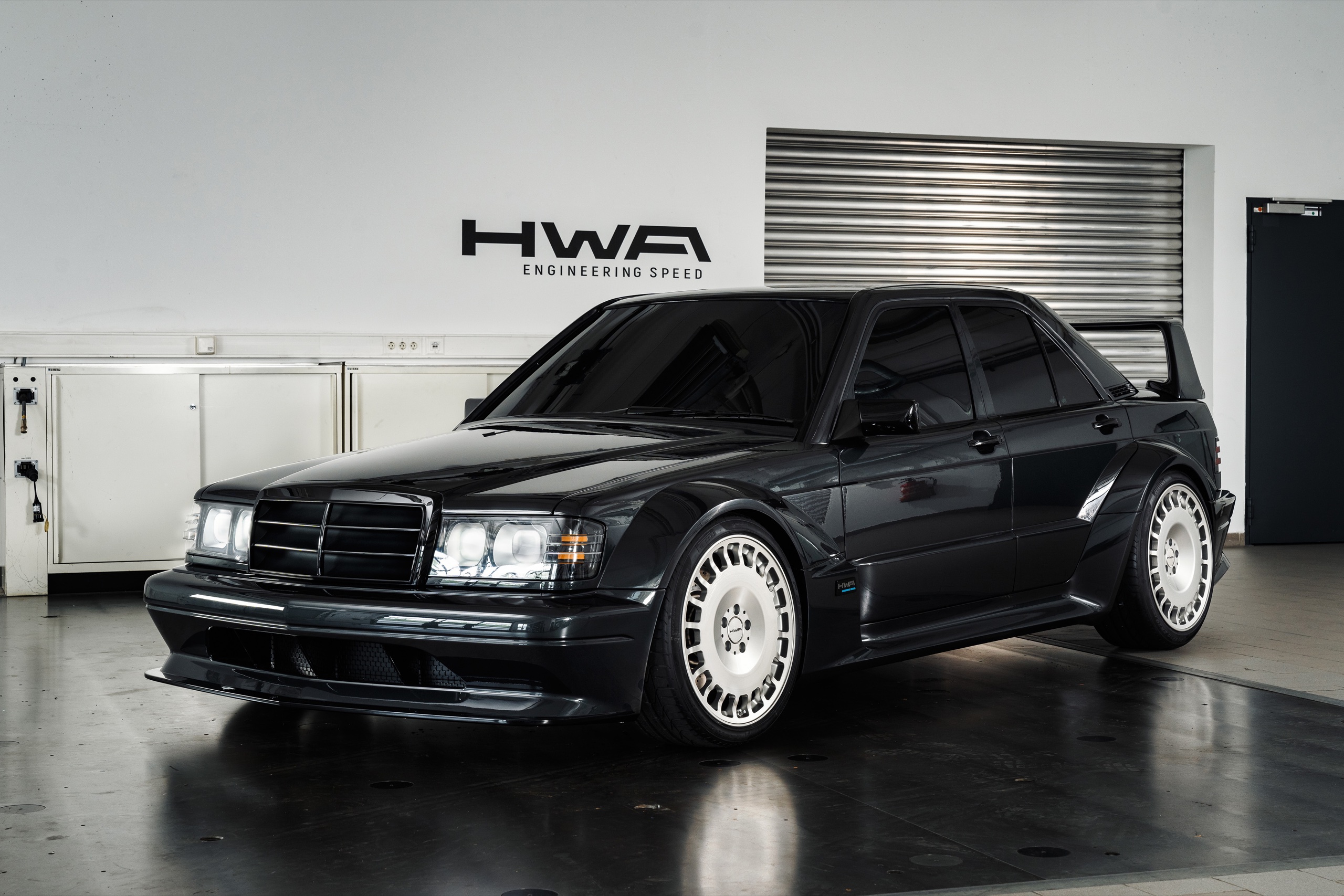
Announced by HWA AG at the end of last year, the HWA Evo is a novel project to bring back the ‘90s DTM legend, the Mercedes-Benz 190E 2.5-16 Evo II. Only 100 road-legal examples will be produced with each priced at 714,000 euros, excluding any tax applicable. The first production example bearing the chassis number 000 was just recently sold at RM Sotheby’s auction at the Concours of Elegance Germany in Tegernsee on 27 July, for the commendable sum of 1.31 million euros.
It is no coincidence that HWA decided to revamp the Evo II, for the company, founded by Hans Werner Aufrecht who was also at the origin of AMG with Erhard Melcher in 1967, surely garnered the knowledge and experiences from the high-performance parts they engineered across the countless commercial and racing Mercedes-Benz models. Whilst AMG was eventually acquired by Daimler Chrysler AG in 1998, Hans Werner Aufrecht continued his motorsport work in HWA in Affalterbach the same year.
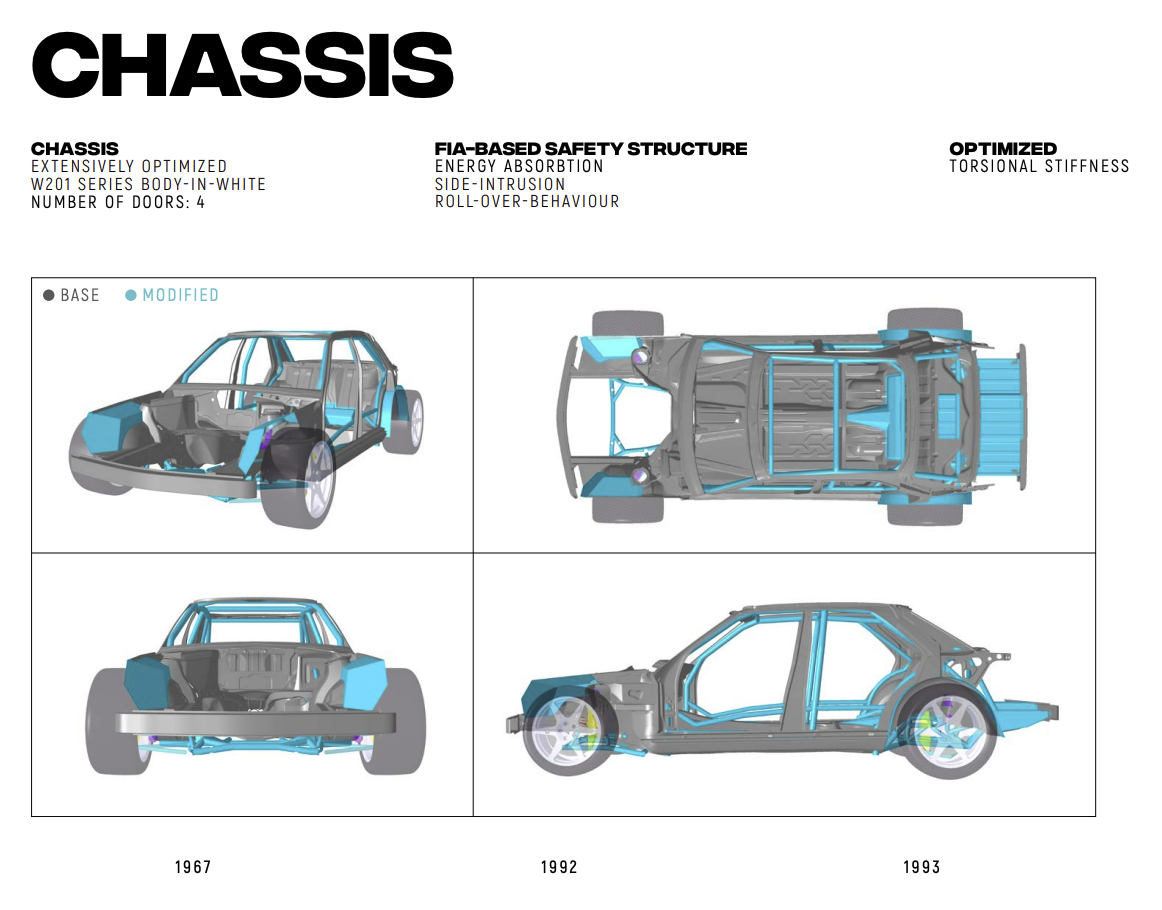
Every example of the HWA Evo will require a donor vehicle from the Mercedes W201 series, however, upon a crash test simulation, it became apparent that the original chassis needed to be strengthened to comply with contemporary safety standards and to withstand the extra torque and power from the new engine.
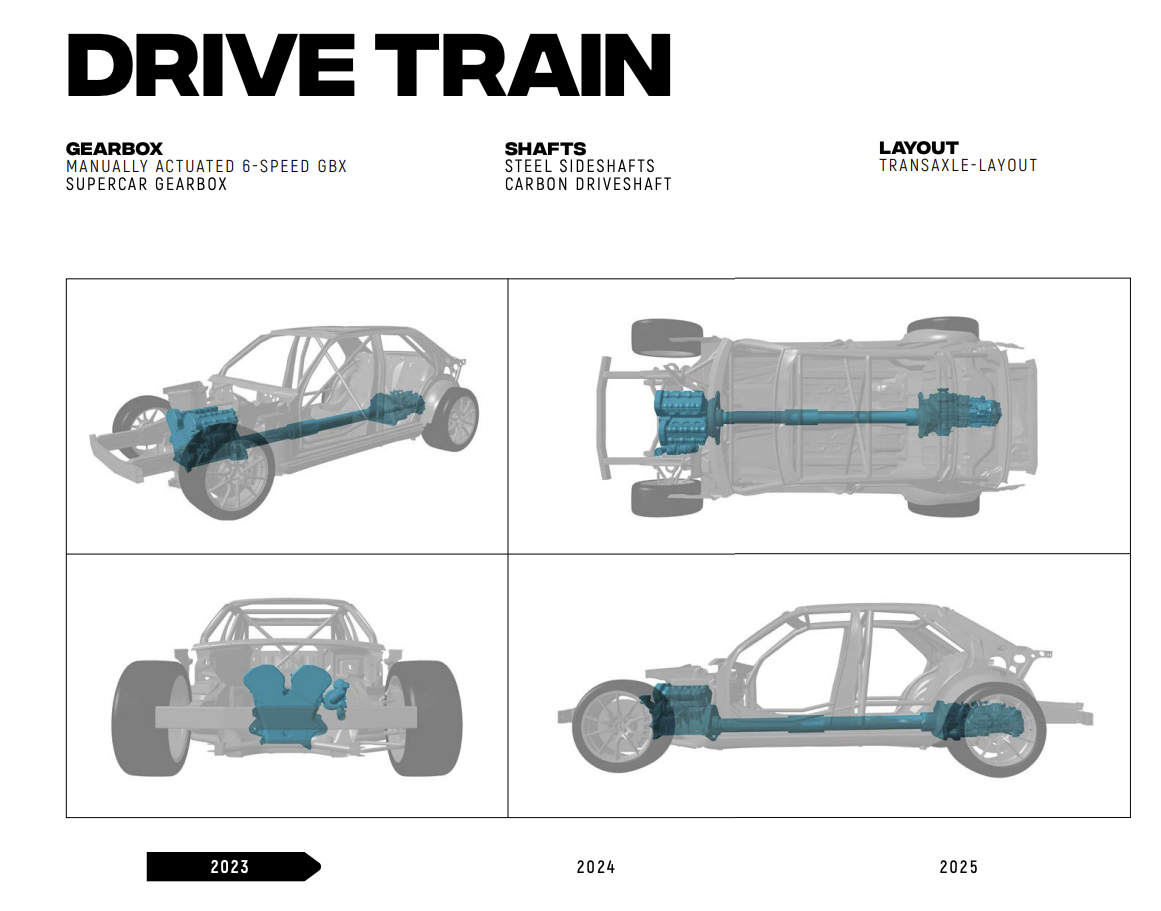
A good part of the front and the back of the chassis is chopped off and replaced with an aluminium subframe, and the midsection is also extensively strengthened. The reinforcement stretches to both the front and back, which intertwines with and essentially amalgamates the entire frame for structural integrity and rigidity. The new chassis has a slightly longer wheelbase, as well as a wider stance to accommodate a modern suspension setting, the front-mid placement of the engine, and the transaxle, with a 6-speed manual gearbox at the rear. Together with a full carbon body, the car has the ideal 50/50 weight distribution while coming with a 1360 kg kerb weight.
The powerhouse of the car is a contemporary Mercedes 3.0 litre V6 twin-turbocharged engine, incorporated with a bespoke ECU system designed in-house at HWA. This combination will comfortably produce around 450 horsepower and 550 pounds-feet of torque for the rear wheels, with an optional “Affalterbach” performance pack that increases the power output to 500 horsepower, and revised gearing that pushes the top speed of the Evo further to 300 kilometres per hour.
The Evo is not only set out to provide a satisfying and fun daily driving experience, it is also designed to withstand extreme racing conditions. Thus, the car is equipped with a bespoke dry sump lubrication system and a proposed-designed intercooler. Christiaan Liebeton, Technical Project Leader of Powertrain explains, “The dry sump system offers multiple benefits, significantly reducing the engine’s height and lowering the car’s centre of gravity, which helps achieve higher cornering speeds. But no matter how intense the cornering forces are, the dry-sump system ensures a consistent oil supply to the engine. Similarly, while the upgraded intercooler increases performance, it also helps keep the engine cool under extreme driving conditions, such as multiple laps of the Nürburgring.”
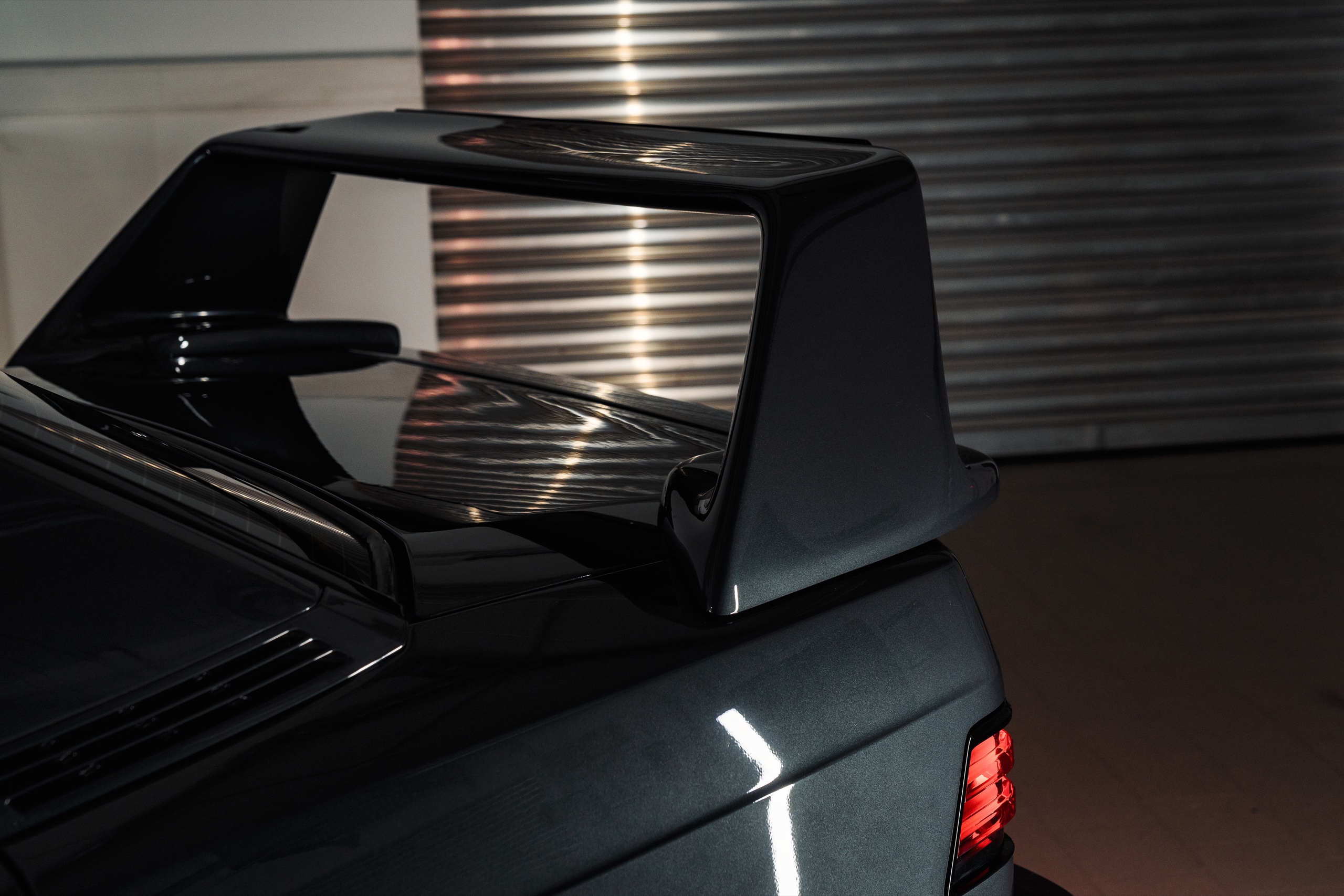
In terms of styling, the car maintains the nostalgic angular design contour throughout and inherited the emblematic big spoiler from the Evo II 190E. But due to the stance and slightly scaled proportion, the overall atmosphere of the car appears more aggressive and simplified in certain ways. Even with the new LED front and taillights, it preserves the design essence from Bruno Sacco quite well. While the example photographed did not have a finalised interior, HWA offers plenty of customisation for the interior and the exterior of the car, including various materials and colours, liveries, a road-legal fire extinguisher and an HWA EVO luggage set, to name a few.
HWA emphasises that the Evo is a new car developed from the ground up, instead of what might be referred to as a resto-mod. This statement holds true in light of the amount of research and engineering development involved especially considering the chassis as well as the engine. It stands as quite a special proposition since there aren’t, at the moment, a lot of four-door saloon revamps in the market, but it sure adds to the variety of visionary classic cars with modern twists.