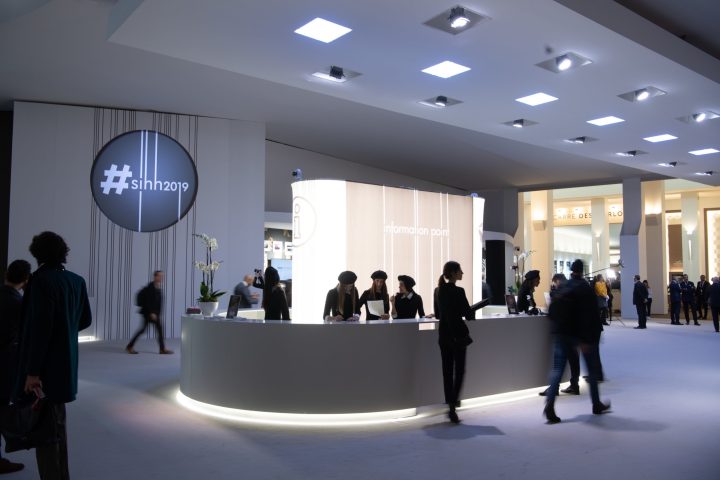
Earlier this year, the horological world, as per tradition, converged on Geneva for the Watches & Wonders fair, held in early April. It’s always been an opportunity to not only discover the new timepieces that are being unveiled (with, on occasion, a sneak peek into future watches as well), but also a tremendous networking event, where I can have excellent discussions with industry friends and contacts. The landscape is shifting though, and whenever I turned my thoughts to selecting which watches to highlight from the fair, I would start thinking about the industry’s short- and medium-term prospects.

Happenings: Watches & Wonders Geneva 2024 and Beyond
TEXT & PHOTOS Sean Li

There’s no denying that there are significant headwinds affecting the watchmaking industry. Reading between the lines of the financial reporting, it feels as though the rollercoaster is only just starting, and the euphoria from the last couple of years has faded, if not vanished entirely. Although there were many new watches presented, there was a sense of apprehension for the coming months, especially in Asia, where the bubble has certainly burst, whether these novelties would lead to commercial gains.
Let’s start with a review of some of the more notable new watches that were shown in Geneva at Watches & Wonders, with a slight detour through others that caught my attention in the first half of the year, in chronological order of when I was able to see them in person.

Van Cleef & Arpels – Brise d’Été
Van Cleef & Arpels are truly masters of the mechanical arts at the service of storytelling. Although these are still, fundamentally, watches, the timekeeping aspect is almost secondary, as it’s easy to be mesmerised by the automaton function. For their new Poetic Complication, the Brise d’Été, the story is that of a summer day, somewhere in the countryside, where you can let your worries fade away simply by watching the gentle swaying of the flowers in the breeze. The time is told by the butterflies that are seemingly flying around the dial. The story may seem simple, but once again, there are tremendous technical and artistic skills required to bring it to life, with an on-demand animation that shows the motion of the flowers whilst the butterflies take a brief flight around the dial before returning to the indicated time.

Jaeger-LeCoultre – new Duomètre collection
The Duomètre collection first saw the light of day in 2007, at a time where many maisons were pushing the limits of technical developments. The dual wing concept, where separate power sources are dedicated to different functions, although based on a vintage watch, was quite revolutionary, and the collection grew from the chronograph into other complications over the years. Now, Jaeger-LeCoultre brings it back, but with a different case design, which has proven somewhat divisive amongst the maison’s collectors. Some prefer the original case, which was perhaps more distinctive and differentiated from their other classical collections. I’m more partial to the new one, which is more elegant and subtle, with some attention to making it more ergonomic. The Duomètre Héliotourbillon Perpetual is the highlight of the new collection, as it’s able to contain the three-dimensional tourbillon mechanism and combine it with a perpetual calendar while maintaining a very wearable and comfortable profile.

IWC Schaffhausen – Portugieser Eternal Calendar
I’ve always been fascinated by perpetual calendars, ever since I saw IWC’s Da Vinci perpetual chronograph, many years ago in London. Back then, I had not yet considered the complexity of dividing the measurement of time itself on such a scale, encompassing centuries whilst still indicating the current time to the second. The sheer calculations required to ensure that the mechanism could function accurately, not to mention to have it all set via the single crown, intrigued me. Of course, there were also several provisos that have always accompanied these mechanical perpetual calendars, relative to their accuracy, a by-product of the simplifications required to make a generally usable Gregorian calendar, which we take in our stride as it does not affect us much in our daily lives, save for the occasional leap year. IWC have taken these to task though and produced a secular calendar which takes these quirks into account, including the moonphase, and created the Portugieser Eternal Calendar, which can function accurately for hundreds of years to come (with regular maintenance, of course), with a moon that will only deviate by one day after 45 million years. You might ask, “what’s the point?”, and the truth is, in practical terms, there isn’t any, except that the challenge was there and IWC took it upon themselves to solve it. What’s more impressive is that the underlying calibre is still the same one that powered the Da Vinci I saw, a quarter of a century ago, based on Kurt Klaus’ work.

Cartier – Santos Dumont Rewind
This new Santos Dumont from Cartier is intriguing because there really is no reason for its particular “quirk” other than they could do it. At first glance, it may come across as another colourway for what has become one of the maison’s most popular interpretations of the classic Santos design, but upon closer inspection, you might think that the watchmakers made a mistake on the dial, as the markers are placed counterclockwise, e.g. 1 o’clock is where you would expect to see 11 o’clock, and so on. In fact, the watch runs counterclockwise, so it may take a little bit of mental adjustment whenever you glance at your wrist to tell the time. It would have been interesting for Cartier to take that idea perhaps a little further, say with a reversed logo on the dial as well. It does hit the mark though as a talking point, and a watch that elicits an emotional reaction.

Piaget – Altiplano Ultimate Concept Flying Tourbillon
There are two extremes that have always challenged watchmakers: adding as many complications as possible to a timepiece, and making a watch as thin as possible. Piaget has always been a strong proponent for the latter, having made its name as one of the leading figures in ultra-thin movements. In 2018, the maison presented the Altiplano Ultimate Concept, which utilised all the latest thinking and technology to produce not only the thinnest movement, but also the thinnest watch possible. I remember the first time I was shown the watch, where it felt like we were not allowed to breathe too hard in its proximity lest it damage it in any way. It does away with the traditional watch construct of movement plus case, making the case itself an integral part of the movement with components directly added to what would normally be the case back. The case is also made of a cobalt alloy, which is considerably more rigid, an important feature when it feels as though you might bend the watch should you tighten the strap too much. The crown is flattened as well, and although you could, if need be, wind it manually, there is a tool provided to help you with that process (and to avoid any excessive pressure on the winding mechanism). The concept proved reliable enough that Piaget entered the AUC into production, albeit as a bespoke order only, allowing clients to customise the choice of colours and finishing. Now, for its 150th anniversary, Piaget takes the next step by adding a flying tourbillon mechanism to the movement. As you can imagine, it’s not a trivial task, and it required making many adjustments to the basic construct of the calibre, especially when you consider the requirement that it fit in the same 41.5mm diameter and 2mm thick dimensions. It’s amazing to see the tourbillon going through its motions in such a thin watch and making it see-through on top of it.

Rolex – Deepsea
The Rolex Deepsea is a watch that has little reason to exist; in its basic configuration, its water resistance is rated for 3,900m, which is a depth that a human simply cannot dive without being in a specialised suit or submersible. So the watch is unlikely to ever experience that kind of pressure, unless you accidentally drop it off the side of your cruise ship into the ocean. But that’s the point of several of the watches I’ve mentioned here; they exists because they can, and the intellectual exercise is prioritised over any practical application. The fact that Rolex have introduced it in yellow gold is the icing on the cake, unless your plan is to use it as a diving weight in the deep end of the pool, as it weighs over 300g. Surprisingly, it doesn’t feel that heavy on the wrist, in part because it’s on a yellow gold bracelet, which distributes the mass around your wrist rather than in the watch head alone. Another change for this year is that Rolex is spinning off the Deepsea as its own collection of “extreme divers’ watches”, whereas it had previously been within the Sea-Dweller collection (you will notice that the writing on the dial reflects that change, omitting any reference to Sea-Dweller). Of course, the question now is whether Rolex will really let loose in the near future and make a gold Deepsea Challenge, which is considerably larger but has a depth rating of 11,000m; currently, the Challenge exists in titanium only.

Vacheron Constantin – Overseas Tourbillon Titanium
As a collector, I’ve always been quite partial to titanium watches, with its slightly darker hue to stainless steel, and the lighter weight. Traditionally though, most maisons have not linked titanium with the classical mechanisms and complications, such as the tourbillon. Vacheron Constantin has made that leap, with a few models in the Overseas collection, including the tourbillon, but with a skeletonised dial, in an effort to differentiate it with the existing Overseas Tourbillon in steel. Now, the maison presents the watch in titanium again, but with a full dial, making the choice a very personal one; some may prefer the higher weight or slightly colder sheen of the stainless steel version, which comes in at 168g, or the lighter weight of the titanium at 111g (it’s quite a perceptible difference in hand). Either way, the watch continues to be delivered with two additional straps, in calfskin leather or rubber, and is equipped with a quick-change system, making it very easy to change according to your mood or occasion.

Chanel – Monsieur Superleggera Intense Black
Chanel is certainly a maison that arguably deserves more credit for its haute horlogerie collection. Far from being an accessory within the fashion house’s offerings, their timepieces go much further from a design and technical perspective. Although the maison long ago invested in its own watchmaking facilities, well before “in-house” became a selling point for mechanical timepieces, they later on invested in Romain Gauthier, an independent brand, and collaborated on their first bespoke movement, the Calibre 1, which is housed in the Monsieur collection. Its time presentation, with a prominent retrograde minute counter at the top, a running seconds in the middle, and jumping digital hours at the bottom, has become a signature for the maison. Here, we have a new iteration of the Superleggera version, a term usually associated with sports cars, denoting a lighter, high-performance automobile, which Chanel is calling “Intense Black”. The ceramic case does make it lighter indeed than the other Monsieur watches, which are in gold or platinum, and the watch fully embraces its sporty name with an aesthetic treatment that is reminiscent of the dashboard of a modern sports car.

Montblanc – Iced Sea 0 Oxygen Deep 4810
I found the Montblanc Deep 4810 interesting as it enters what’s becoming a slightly saturated segment of, shall we say, overengineered dive watches, similar to the Rolex Deepsea mentioned earlier. The difference though is that you don’t expect this kind of watch coming from Montblanc. After all, the maison’s name will make you think more of altitudes and mountains rather than the depths of the oceans. I would suggest that it may go under the radar as a result, given that it’s not its usual domain, especially considering the extreme aspect of this watch. However, I was impressed by its execution, and wearability, which belies its technical specs, with a 43mm diameter and a 19.4mm thickness. In comparison, the Rolex Deepsea is a little wider at 44mm, but less thick at 17.7mm (although here the difference may be even smaller as it depends on how the measurement is taken). Certainly, the titanium makes the Montblanc Deep 4810 easier to wear, combined with the rubber strap, but it simply didn’t feel quite as imposing on the wrist as you might expect, also given its high depth rating, taken not from any point in the ocean but from the height of the Mont Blanc itself. It also features Montblanc’s zero oxygen construction, which was initially developed to minimise fogging but has the added benefit of also reducing oxidation on the watch’s components.

Audemars Piguet – ReMaster 2
We often associate vintage watches with very classical shapes and designs, but we are occasionally reminded that there were also periods of extreme creativity and experimentation, as exemplified by the Audemars Piguet ReMaster 2. It’s inspired by a watch produced in the early ‘60s, when the maison created a few asymmetrical designs, produced in very small quantities. Just as today, it was perhaps not easy to convince the management to take a leap of faith into what might be considered an acquired taste. However, today’s market is arguably much more accepting of these watches that break the traditional moulds. The ReMaster 2 is not a strict re-issue of the Model 5159 on which it’s based; for starters, it’s considerably larger at 41mm instead of 27.5mm. It’s also in a modern “sand gold” alloy, which takes on different tints depending on the lighting. The aesthetic design takes full advantage of the landscape format of the dial, with the “Audemars Piguet” branding being much more prominently displayed. Perhaps in an effort to enhance legibility, the minute hand actually extends into the case when it’s near 12, 6 and 9 o’clock, and if you look closely, you can see there’s a small notch to that effect. It remains a rare piece, even though Audemars Piguet has certainly given it a vote of confidence by producing 250 pieces, rather than the seven that were made for the 5159, and it will be a centre of attention whenever you come across it at any watch gathering.

H. Moser & Cie – Streamliner Minute Repeater
H. Moser & Cie’s Streamliner design has certainly earned the right to be called iconic. Although it was introduced when integrated steel bracelet watches were starting a rapid ascent a few years ago, Moser’s design is distinctive, from the shape of the case, the flowing bracelet, to the omission of almost all markers from the dial, and even no mention of the brand at all; that, in itself, is a powerful statement to the effectiveness of a particular design. With the Streamliner Concept Minute Repeater Tourbillon Blue Enamel (to give it its full extended moniker), these features are very much present, although considerable attention is given to highlight the minute repeater complication and the tourbillon, which are visible dial-side, with a striking textured blue enamel dial. The modernity of the design is in stark contrast with the classicism of the minute repeater and tourbillon combination, even down the hands, that retain their luminous aspect in the dark; remember that chiming mechanisms predate luminous watches as they were developed in part to be able to tell the time in the dark. They’ve even managed to retain a 5 ATM water resistance, also unusual for many minute repeaters, especially those activated with a slide mechanism.

Perhaps it’s indicative of the current market that there’s relatively few watches that have stood out to me thus far; there were, of course, many more watches on show, not only in Geneva, but also quite a few more collections presented in the weeks since then, both online and through local presentations in Hong Kong. I feel that several brands have been hesitant to show their full collections or are simply consciously waiting for the economic conditions to improve, rather than releasing them into a soft market. I would argue though that this approach may be self-defeating, as simple colour variations or extensions of existing collections aren’t going to lead to an uptick in the sales figures.
On a positive note, if you’ve been on the fence about a specific watch in recent years, we do have a buyer’s market, whether it’s new from the boutique or on the secondary marketplaces. Some of the watches considered unobtainium are surfacing again as well. How long this will last remains to be seen; the watch industry may have evolved, but it also tends to navigate its waters much like an oil tanker at sea; even with the best will, it’s not as nimble or manoeuvrable as you’d ideally like it to be, and each move takes careful planning and execution. At the moment, it’s the calm before the storm, during the traditional watchmaking holidays. We will keep a close eye on the industry’s developments and its new wares come this fall.