When the conversation turns to rattrapante complications, the perception instinctively goes to the split-second chronograph: two superimposed seconds hands, one racing to catch up with the other in a mechanical ballet of precision. It is a complication born of the need to measure fleeting, sequential moments. But in recent years, Parmigiani Fleurier has quietly dismantled that assumption, reimagining the rattrapante not as a tool for splitting seconds, but as an instrument for reclaiming time itself.
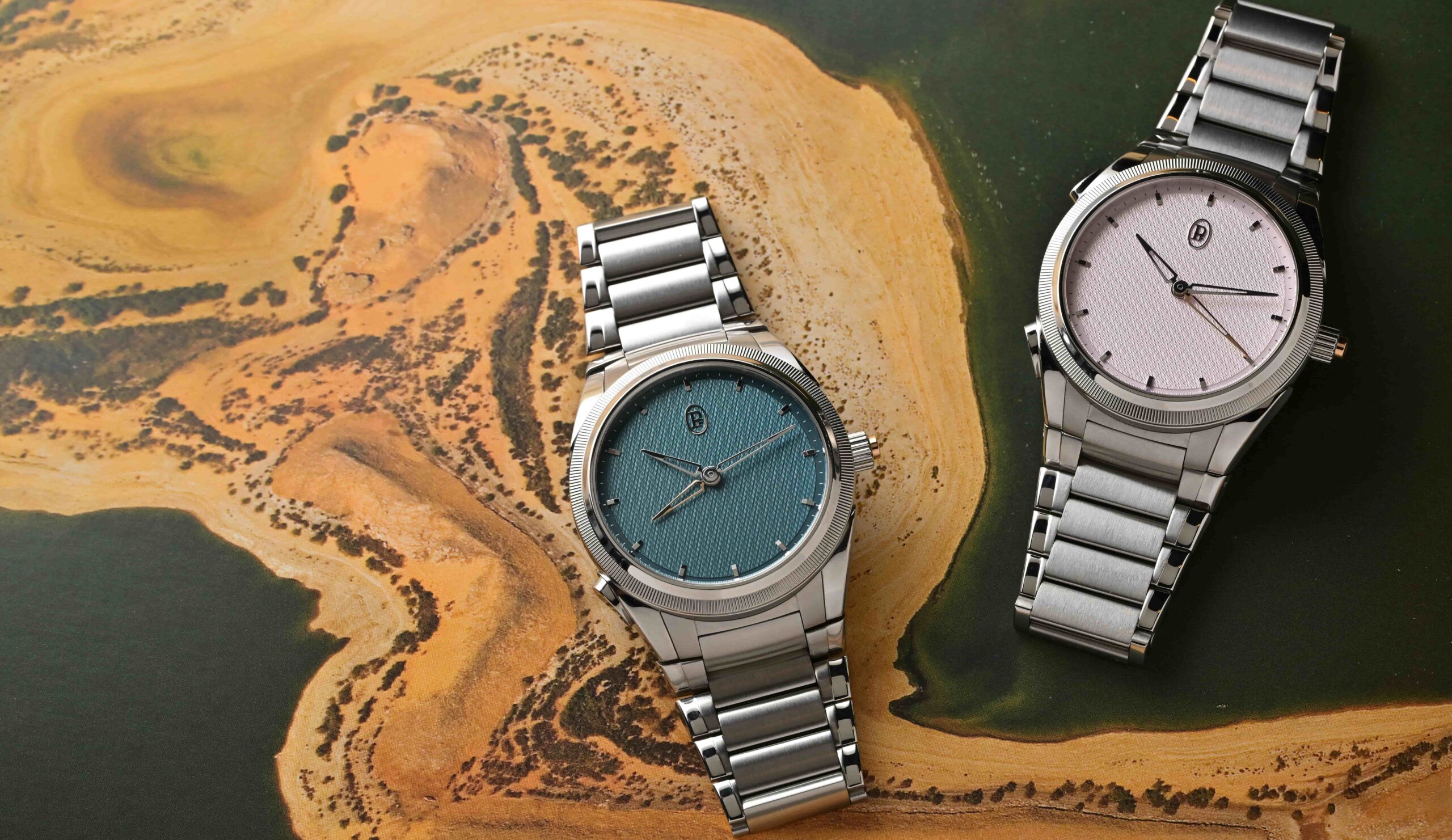
Modern: The Parmigiani Fleurier Rattrapante Series
Text Cherie Wong
Photos Kimio Ng

In 2022, the maison introduced the Tonda PF GMT Rattrapante, a subversive take on the dual-time watch. Here, the home hour hand is concealed beneath the local hour hand, springing forward or snapping back into place at the push of a button. It was a poetic gesture that dispensed with the utilitarian origins of the GMT, a complication originally forged in the cockpits and field operations of the mid-20th century. The result was a GMT that, rather than prioritising function, elevated the act of tracking two time zones into something almost philosophical.

Just to be clear, Parmigiani is more than capable of crafting a superlative traditional GMT. The maison also produces one of the finest split-second chronograph movements in existence. The choices behind the Tonda PF Rattrapante series, therefore, were deliberate acts of a contemplation of the meaning of timepieces and seeking alternative, arguably more practical applications of classical complications.

Then, in 2023, Parmigiani went further. The Tonda PF Minute Rattrapante transferred the same principle from the hour hand to the minute hand. On the surface, it might appear a modest shift: a change of scale, from hours to minutes. But in reality, it represented a far more profound challenge, both mechanically and conceptually.

The Tonda PF Minute Rattrapante operates with two stacked minute hands resting one atop the other, indistinguishable until the function is called upon. Activate the pusher at eight o’clock, and the lower rose-gold hand advances by one minute; use the pusher at ten o’clock, and it jumps forward by five. When the pusher set into the crown at three o’clock is engaged, the rose-gold hand instantly catches up to its rhodium-plated counterpart and resumes its course in unison. In daily life, one might use it for the same tasks that would ordinarily call for a dive bezel, perhaps a moment for oneself. With the Minute Rattrapante, the counting minutes are transformed into small, deliberate rituals. The act of measuring time becomes an event in itself.

At the heart of the GMT Rattrapante lies the calibre PF051, while the Minute Rattrapante is powered by the calibre PF052. Two movements, despite their shared architecture and philosophical kinship, reveal distinct personalities upon closer inspection. Both calibres share a slender 4.9 mm profile and a 48-hour power reserve beating at 21,600 vph (3 Hz) as the shared base is from Vaucher Manufacture Fleurier, yet their mechanical narratives diverge. The PF051, with its 215 components and 31 jewels, achieves the sleight of hand required to conceal one hour hand behind another while the PF052, in contrast, expands its repertoire to 271 components, accommodating the world’s first minute rattrapante mechanism within the same svelte dimensions. Both calibre share a 22-carat rose-gold micro-rotor that bears the grain d’orge guilloché as a subtle nod to the dial. Together, the two movements form a diptych: one dedicated to the poetry of crossing time zones, the other to the dedication of measuring passing moments.


The Tonda PF Rattrapante models embody a larger vision. As the house marks the passage from Chronos, measuring linear, imposed time to Kairos, the time one chooses to inhabit as one’s own. In a world saturated with information and acceleration, they offer a pause, an invitation to reclaim the moment and contemplate on time itself.