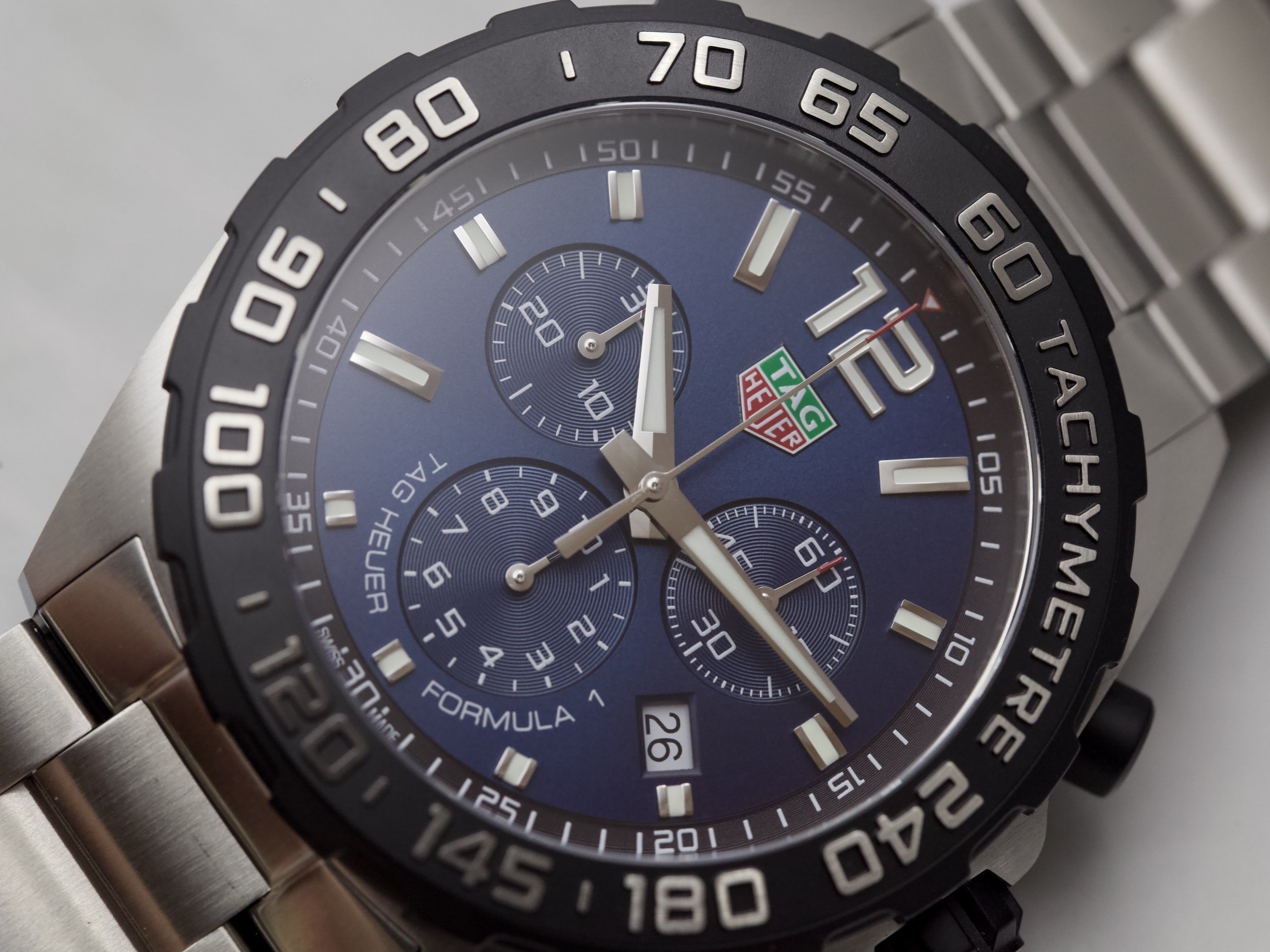
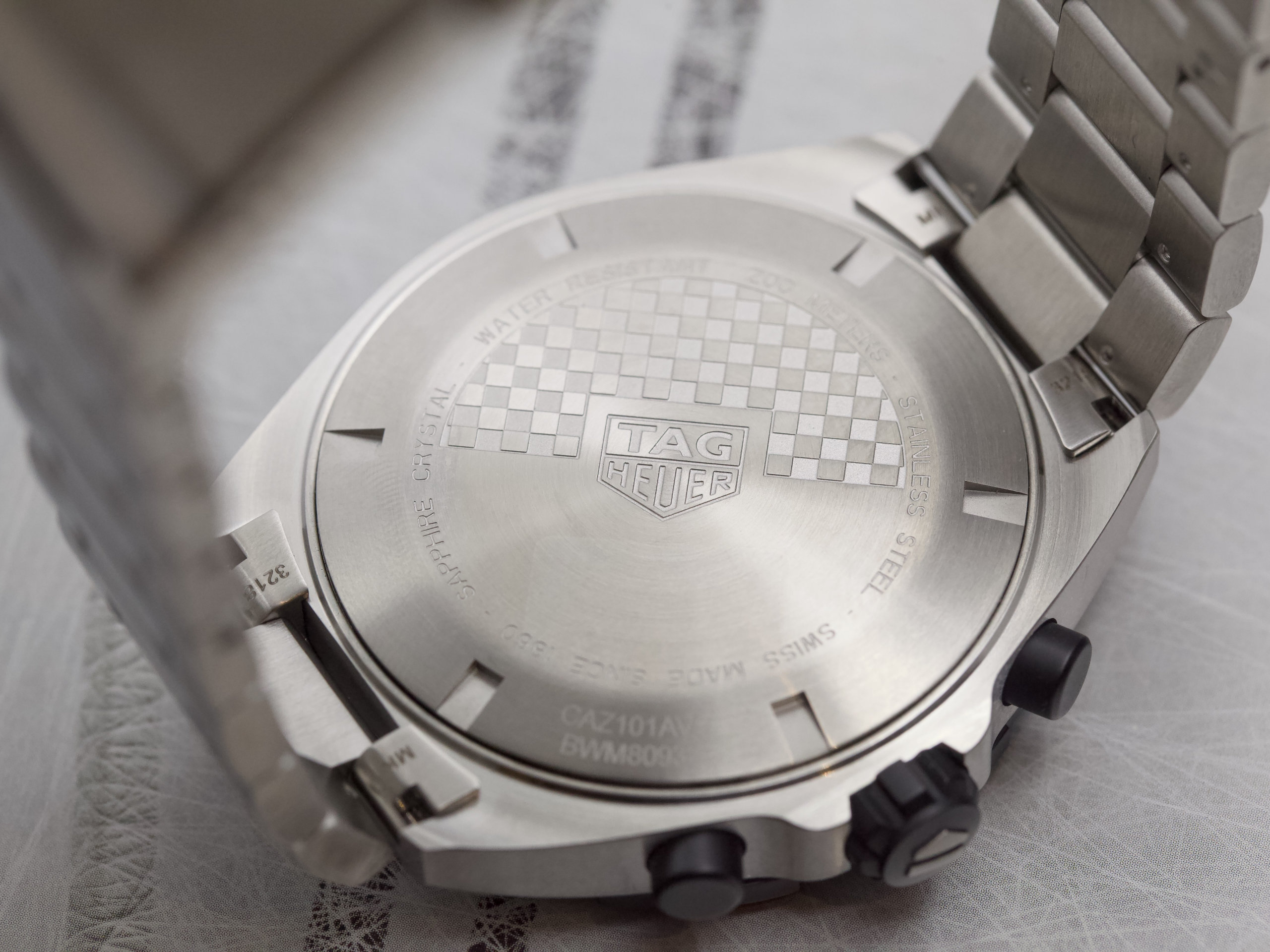
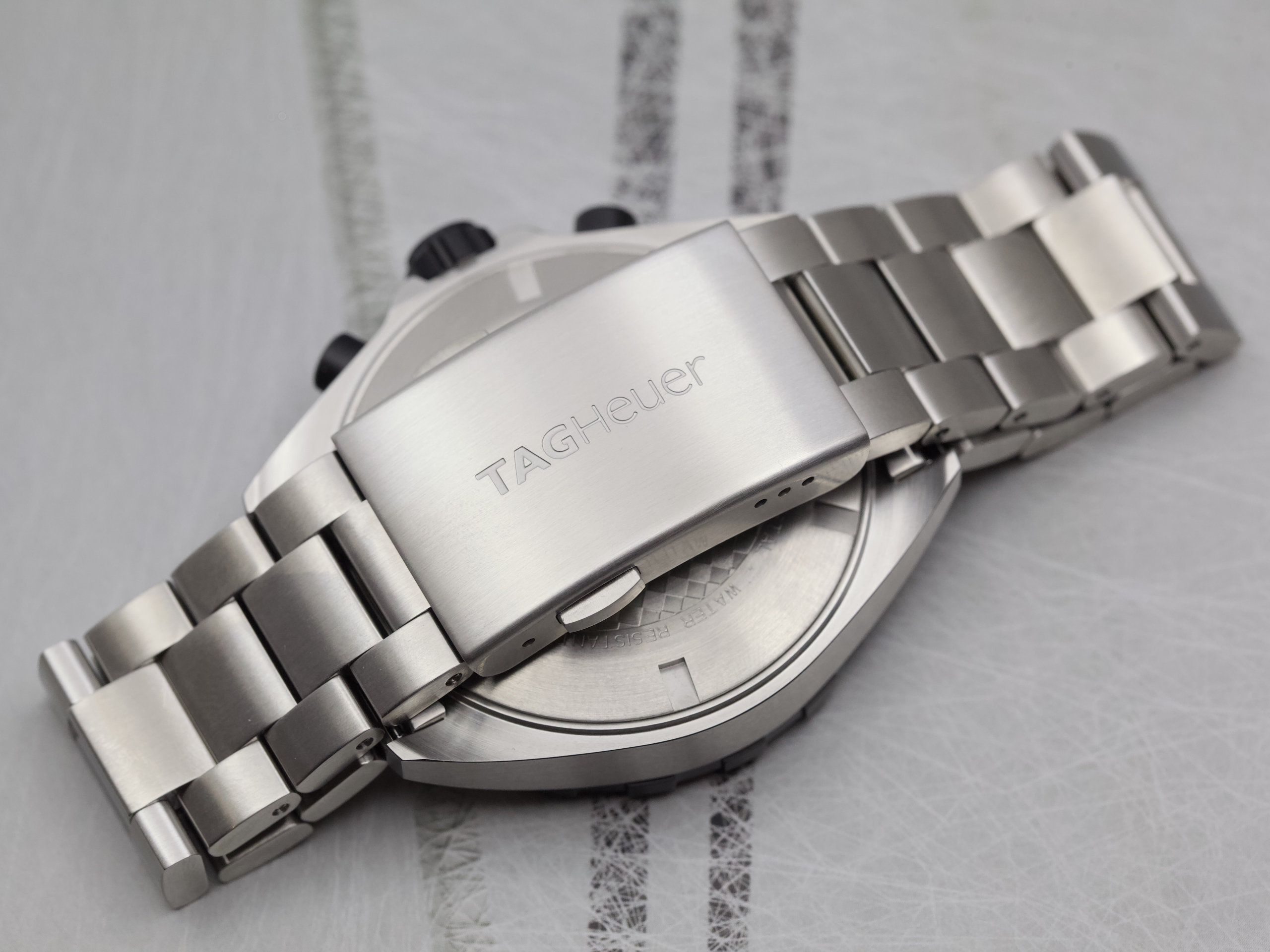
We take a detour from the mechanical timepieces we usually present on Blackbird Watch Manual to take a look at a new iteration of what is a classic watch in a pure sense: the Tag Heuer Formula 1 Chronograph. The collection first saw the light in 1986, when Tag Heuer was involved in timing equipment and sponsorship for the eponymous F1 racing series. It was also a time when fun, colourful quartz watches were the norm and trending (well before social media got involved). The series was paused in 2000, after the brand’s acquisition by the LVMH Group, but it was brought back in 2004, evolved into a more contemporary version, with both quartz and mechanical calibres, and it has been a mainstay in Tag Heuer’s offerings since then.
Modern: Tag Heuer Formula 1 Chronograph
TEXT Sean Li
PHOTOS Francis Cheung

Some of the original series were brought back earlier this year in a collaboration with lifestyle concept Kith, available in the original colourways with quartz movements, along with a small number of new versions, still in the original’s 35mm case size. It may seem diminutive by today’s standards, but it certainly touched a lot of heart strings as it could be said the original Tag Heuer F1 was probably a common “first watch” for many of today’s elder watch aficionados.

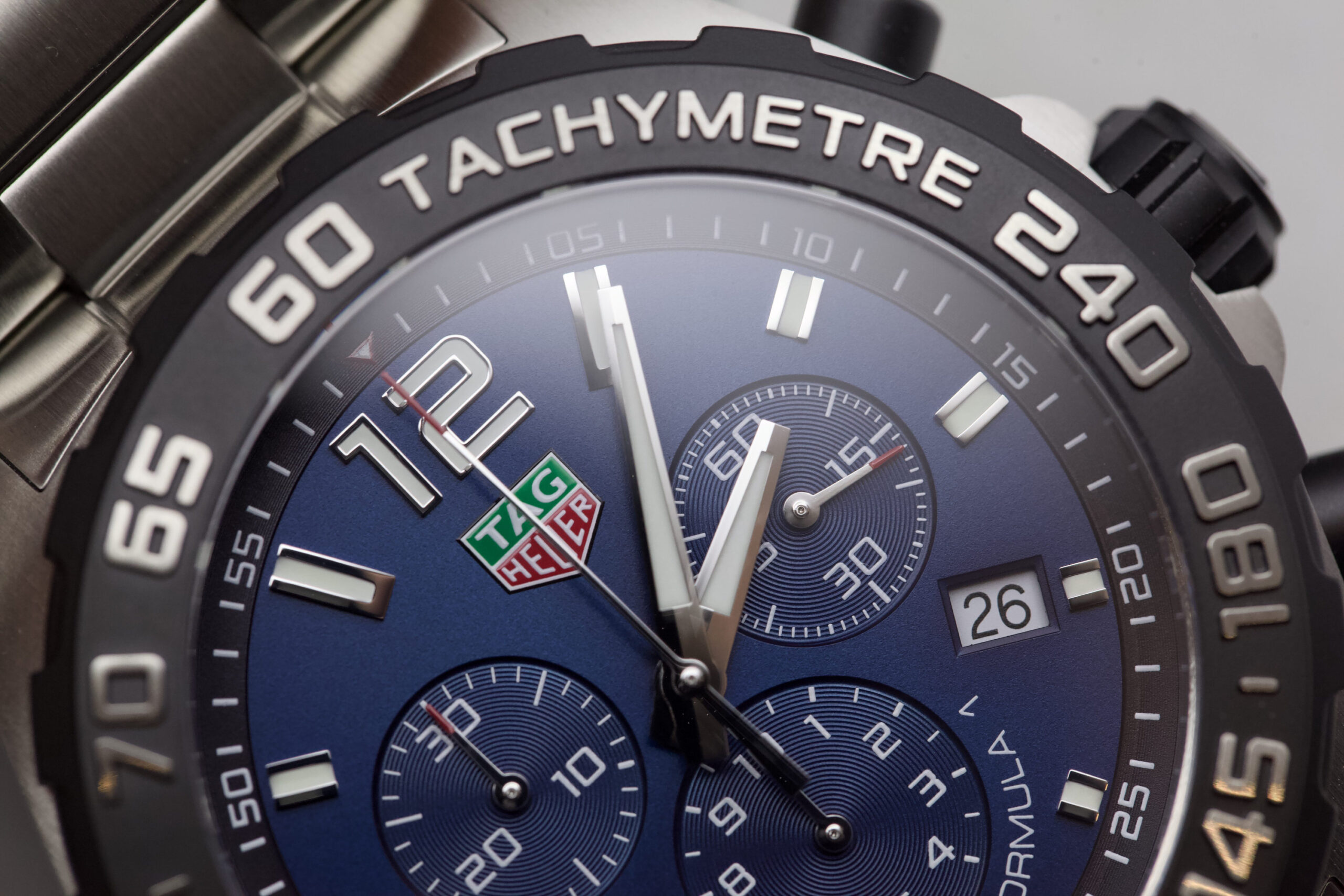
Recently, Tag Heuer quietly added some more Formula 1 watches to the catalogue, expanding on models that are available with red or green dials with a new yellow version or the racing blue we’re showing here. They’re presented with 43mm steel cases with black PVD bezels, crowns and pushers, raised tachymetric markings, and either a matching rubber strap or a steel bracelet.

The F1 Chronograph is powered by the Swiss-made Ronda 5040.D calibre, with a battery life of around 2.5 years. There is a subdial for the running seconds at 3:00, whilst the chronograph seconds are shown on the central hand with a 30-minute counter at 9:00 and a 1/10th second counter at 6:00. The latter will only stay in motion for the first 30 seconds of a timing event, but the calibre continues to time the 1/10th second intervals and will display them when the chronograph is stopped, a power saving feature but also one that avoids unnecessary wear and tear on this fast-moving indication.

You might wonder why we were compelled to talk about this watch; the fact is, quartz watches have tended to be “talked down” by the watch industry since the end of the so-called “Quartz Crisis” in the early ‘90s. There is considerably more focus on mechanical timepieces, for their craftmanship and technical nature, and much more press is devoted to them in general. But quartz continues to play an important part in the watch industry, and we are likely to delve into this aspect in a future article.

In the meantime, this Tag Heuer Formula 1 Chronograph represents an undeniable value proposition. It’s a classic aesthetic execution and a price point that is on par with what some of the haute horlogerie brands will invoice for a full service on a mechanical watch. It won’t set any auction records, but it’s a fun watch to wear casually, certainly fit for an impulse purchase for any Tag Heuer or Formula 1 fan, or those who still have Tag Heuer on the mind from the original Formula 1 and want something with a more contemporary design.